
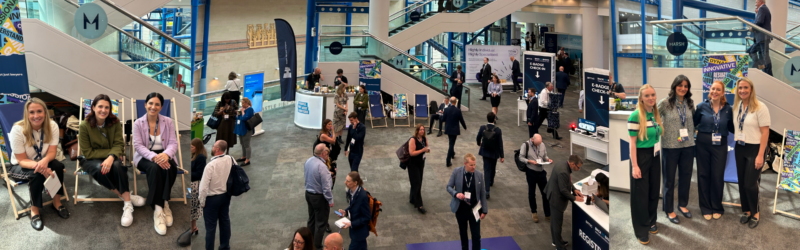

Thank you to all the specialists from across the motor claims market who came together at our recent Motor Claims Forum to share practical insight on the current pressures and emerging trends shaping the claims landscape. The discussion focused on cost control, litigation strategy and emerging risks across England & Wales, Scotland and Northern Ireland.
Key themes included:
Small Claims Consultation – Paper Hearings
We highlighted the recently announced proposals to reform the Small Claims Track, which would allow the Court to impose paper determinations even where the parties would prefer an oral hearing. The proposals could also extend to OIC quantum disputes.
We continue to support initiatives aimed at improving the lifecycle of lower-value claims – including our mediation strategy – but there is a real risk of unintended consequences. Removing the prospect of attending trial or being tested as a witness could reduce litigation risk for claimants and encourage more cases to be issued. In turn, that could erode the savings currently achieved by compensators and offset any efficiencies potentially gained through a paper-based process.
Following feedback from forum attendees, we have worked alongside our insurer clients to prepare a draft consultation response.
If you have not received a copy or would like to discuss the proposals further, please get in touch with liam.mcguire@h-f.co.uk Liam McGuire, Partner and Head of Motor.
Taxi Claims – Escalating Cost and Complexity
Taxi claims continue to present significant challenges for insurers. The sector remains close-knit and predominantly cash-based, making reliable rates evidence difficult to obtain. Inconsistent licensing requirements across authorities cause further complications, and claimants frequently pursue claims for both loss of profit and social, domestic and pleasure use.
Credit hire remains a major driver of indemnity spend. Daily hire rates exceeding £1,400 plus VAT are increasingly common despite earnings levels often being significantly lower. When combined with lengthy hire periods and limited evidence of mitigation, claims can quickly progress into the Intermediate Track, creating substantial cost exposure.
Looking ahead, the emergence of autonomous taxi fleets is likely to introduce additional complexity. High-value vehicles equipped with advanced technology could significantly increase repair costs and indemnity exposure.
For support with taxi claims strategy, contact melanie.mooney@h-f.co.uk Melanie Mooney, Partner.
Scotland – Inflation, Costs and Market Change
Inflationary pressures continue to shape the Scottish claims landscape. The Judicial College Guidelines have increased by 8% since 2024, with repair and other costs continuing to trend upward. Large loss and care claims remain a particular concern, driven by increasing reliance on borderline claims and ongoing pressures within NHS services.
Costs inflation shows little sign of slowing. Claimant court fees are scheduled to increase by 3% annually over the next three years with the base unit rate expected to rise by over 21%, from £18 to £21.80. Counsel fees have increased sharply, with relatively junior counsel frequently commanding £2,000-£2,500 per day for substantive hearings, excluding preparation.
The Regulation of Legal Services (Scotland) Act 2025 presents both opportunities and challenges. The reforms open the door to investment and innovation but also raise important questions around investor influence and the future direction of the legal services market.
To stay up to date on Scottish developments, contact steven.smart@h-f.co.uk Steven Smart, Partner and Head of HF Scotland.
Northern Ireland – Data-Led Defence Strategies
The continued growth of accident management companies operating within Northern Ireland has reinforced the importance of intelligence-led claims handling. Many of these organisations operate with limited regulatory oversight, making data sharing and market insight increasingly valuable.
We maintain detailed intelligence on accident management companies operating across the jurisdiction. Combined with targeted litigation strategies and robust evidential challenges, this helps us support our insurer clients to better scrutinise claims and manage indemnity spend.
Increasing plaintiff costs and outlay make early intervention more important than ever. Well-pitched lodgements, proactive discovery applications and early strategic decision-making can significantly reduce overall claims spend and improve litigation outcomes.
For support on Northern Ireland claims issues, contact francine.quinn@h-f.co.uk Francine Quinn, Associate Partner, Belfast.
Medical Agency Fees And Translation Costs
The litigation surrounding medical agency fees continues to evolve. Following the decision in JXX/HLA, all parties have now lodged appeals to the Court of Appeal. At its simplest, the case boils down to the question of whether medical agencies should be paid as an unquantified sum, or should have to detail the work carried out. .
Our costs team continue to achieve strong results challenging translation fee claims presented by Equilex. These successes reinforce the value of robust scrutiny of third-party costs and the opportunities available to insurers to reduce unnecessary claims expenditure.
To discuss medical agency fees, translation costs or wider costs issues, contact paul.mccarthy@h-f.co.uk Paul McCarthy, Partner and Head of Costs.
Related Insights

HF’s first Motor Claims Forum – Key Takeaways
At our first Motor Claims Forum, specialists from across the market shared practical insight on current pressures and emerging trends shaping motor claims. This new quarterly roundtable series is...

Free Webinar: Autonomous Vehicles
With the UK Government fast-tracking autonomous vehicle pilots to spring 2026, the transport sector is entering a pivotal phase of...

Horizon Scanning: Claims Inflation in Motor Claims 2025
Our latest report: Horizon Scanning: Claims Inflation in Motor Claims 2025 is now available! Sign up here to receive your...

Calling Fleet Operators – The Rising Risks of Motoring Offences
A year on from the introduction of sentencing guidelines for driving offences in England & Wales we’re seeing the trends...